
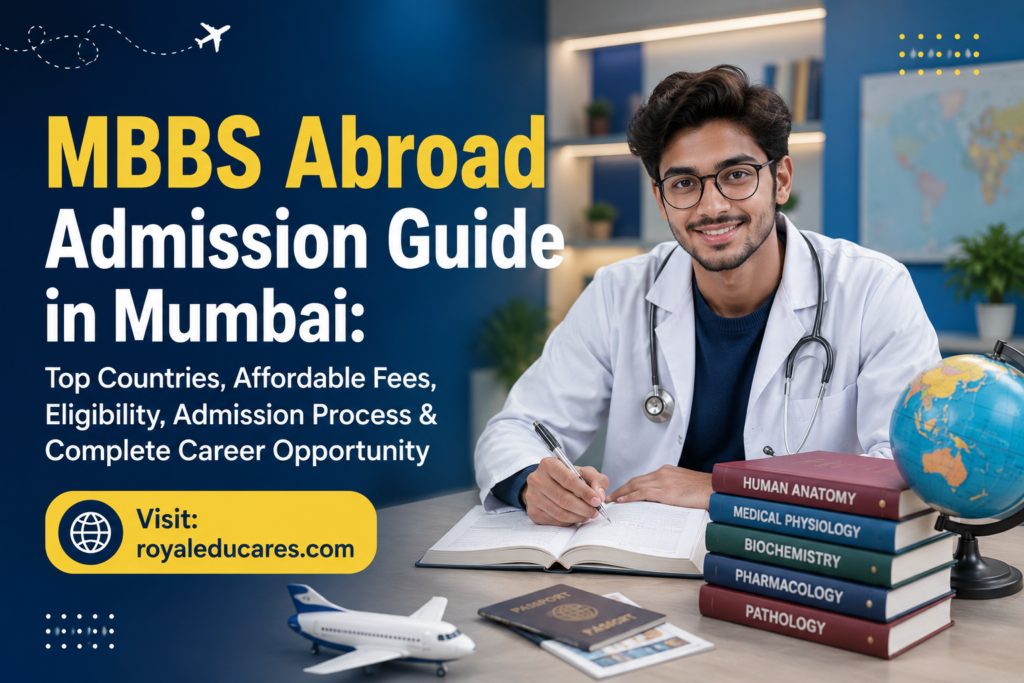
MBBS Abroad Admission Guide in Mumbai: Top Countries, Affordable Fees, Eligibility, Admission Process & Career Opportunities
Introduction
Planning MBBS abroad starts with trusted guidance. Discover top countries, eligibility, affordable fees, admission process, documentation, scholarships, and career opportunities through expert MBBS abroad admission guidance in Mumbai for students.
Accreditation & Approvals

UGC-DEB APPROVED
AICTE APPROVED

AIU APPROVED

NAAC +++ ACCREDITED

COBSE BOARDS
PHARMACY COUNCIL OF INDIA

BAR COUNCIL OF INDIA

WORLD EDUCATION SERVICES

MHRD

Get Free Career Counseling
Students looking for complete MBBS Abroad Admission Guidance in Mumbai can explore: https://royaleducares.com/mbbs-abroad-admission-guidance-in-mumbai/
If you are comparing opportunities for MBBS in India and Abroad Admission Guidance, visit: https://royaleducares.com/mbbs-india-abroad-admission-guidance-in-mumbai/
For complete medical admission guidance, career counselling, and higher education support, visit Royal Educares: https://royaleducares.com/
What is MBBS Abroad?
MBBS Abroad refers to pursuing a Bachelor of Medicine and Bachelor of Surgery (MBBS) degree at a recognized international medical university outside India. Every year, thousands of Indian students choose overseas medical education to achieve their dream of becoming doctors while gaining international academic exposure.
Many universities abroad offer modern infrastructure, experienced faculty, practical clinical training, advanced laboratories, and globally recognized medical education. Students also benefit from multicultural learning environments that help develop communication skills, adaptability, and professional confidence.
Choosing the right university requires careful evaluation of eligibility, recognition, curriculum, clinical exposure, tuition fees, living expenses, and future career opportunities.
Why Do Students Choose MBBS Abroad?
Medical education abroad has become increasingly popular among Indian students for several reasons.
Some of the major factors include:
- Affordable tuition fees in many countries
- Modern medical universities
- Advanced laboratories
- Well-equipped teaching hospitals
- International learning environment
- Practical clinical exposure
- Globally recognized medical education
- Diverse student communities
- Better student support services
- Opportunities for higher education
For many aspiring doctors, studying abroad provides an alternative pathway to quality medical education while broadening their international perspective.
Why Mumbai Students Prefer MBBS Abroad
Mumbai is home to thousands of medical aspirants every year. While many students aim for admission within India, others explore international universities based on their academic goals, budget, and preferred learning environment.
Students from Mumbai often seek MBBS abroad because of:
- Access to multiple country options
- International university choices
- Structured admission guidance
- Affordable education opportunities
- Exposure to global healthcare systems
- Better awareness of overseas education
Professional guidance helps students compare universities and make informed decisions according to their individual requirements.
Benefits of Studying MBBS Abroad
Studying medicine in another country offers academic as well as personal development opportunities.
Some important advantages include:
International Academic Exposure
Students study alongside peers from different countries, helping them understand diverse healthcare systems and cultures.
Modern Infrastructure
Many international medical universities provide:
- Digital classrooms
- Advanced laboratories
- Simulation centres
- Teaching hospitals
- Research facilities
- Medical libraries
These facilities support both theoretical and practical learning.
Practical Clinical Training
Clinical exposure plays a significant role in medical education.
Students generally gain experience through:
- Hospital postings
- Clinical rotations
- Patient interaction
- Laboratory training
- Medical case discussions
- Practical demonstrations
Hands-on learning helps build confidence before entering professional practice.
Global Learning Environment
Studying abroad encourages students to develop:
- Communication skills
- Cultural awareness
- Professional ethics
- Teamwork
- Leadership
- Adaptability
These qualities are valuable throughout a medical career.
Who Should Consider MBBS Abroad?
MBBS abroad may be suitable for students who:
- Aspire to become doctors.
- Wish to study in an international environment.
- Are interested in global medical education.
- Want practical clinical exposure.
- Are willing to adapt to a new culture.
- Value international academic experience.
- Plan for long-term medical careers.
Every student should carefully evaluate personal goals, eligibility, and university options before making a decision.
Skills Required to Become a Successful Doctor
Medical education requires more than academic excellence.
Future doctors should continuously develop:
Communication Skills
Doctors interact with patients, families, nurses, and healthcare professionals every day.
Critical Thinking
Clinical decision-making requires logical analysis and evidence-based reasoning.
Compassion
Empathy and patient-centred care are essential qualities in the medical profession.
Time Management
Medical studies involve lectures, practical sessions, clinical postings, and continuous learning.
Professional Ethics
Ethical practice and patient confidentiality remain fundamental responsibilities of every healthcare professional.
Problem-Solving Ability
Doctors evaluate symptoms, diagnose illnesses, and recommend appropriate treatment plans based on clinical findings.
Why Choosing the Right Country Matters
Selecting the right destination is one of the most important decisions when planning MBBS abroad.
Students should compare:
- University recognition
- Curriculum
- Tuition fees
- Cost of living
- Medium of instruction
- Clinical training
- Safety
- Student support
- Hostel facilities
- Career opportunities
Comparing these factors helps students choose an option that aligns with their academic goals and financial planning.
Popular Reasons Students Search for MBBS Abroad
Many students search online using queries such as:
- MBBS Abroad
- Study MBBS Abroad
- Affordable MBBS Abroad
- MBBS Abroad Fees
- MBBS Abroad Admission
- Best Country for MBBS Abroad
- MBBS Abroad Eligibility
- MBBS Abroad Without Donation
- MBBS Abroad for Indian Students
- MBBS Abroad Admission in Mumbai
These searches reflect the growing interest among students seeking comprehensive information before starting their medical education journey.
Why Professional Admission Guidance is Important
Choosing an overseas medical university involves several important decisions.
Professional guidance helps students understand:
- Eligibility requirements
- University selection
- Country comparison
- Admission process
- Required documents
- Fee structure
- Accommodation options
- Visa procedures
- Travel planning
- Future academic opportunities
Accurate guidance helps students avoid confusion and confidently plan their medical education.
Scope of MBBS Abroad
An internationally recognized medical degree can provide opportunities for further education and professional development, subject to the licensing and regulatory requirements of the country where a graduate wishes to practise.
Graduates may explore pathways such as:
- Postgraduate medical education
- Clinical practice after meeting applicable licensing requirements
- Medical research
- Public health
- Healthcare administration
- Academic careers
- International healthcare opportunities
Career prospects depend on individual qualifications, licensing examinations, experience, and the regulations of the destination country.
What’s Coming Next
The next section explains MBBS abroad eligibility, NEET requirements, age criteria, admission process, required documents, tuition fees, education costs, and important guidelines that every student should understand before applying to an international medical university.
MBBS Abroad Eligibility, NEET, Admission Process, Fees & Required Documents
Before applying for MBBS abroad, students should understand the complete eligibility criteria, admission requirements, documentation, and fee structure. Proper preparation helps make the admission process smooth and enables students to choose the right medical university according to their academic profile and career goals.
Although admission requirements may vary between universities and countries, many internationally recognized medical universities follow similar basic eligibility guidelines.
Eligibility for MBBS Abroad
Students should carefully review the eligibility requirements before applying.
Generally, applicants are expected to:
Complete 10+2 or an equivalent qualification.
Study Physics, Chemistry, Biology, and English as qualifying subjects.
Meet the minimum academic requirements prescribed by the university.
Fulfil the applicable admission guidelines.
Eligibility requirements may vary depending on the country and institution.
NEET Requirement for MBBS Abroad
One of the most common questions students ask is whether NEET is required for studying MBBS abroad.
Indian students planning to pursue MBBS outside India should understand the applicable regulations before applying.
A valid NEET qualification may be required under the applicable guidelines for students who intend to pursue medical education abroad and later seek registration or licensing in India. Students should always verify the latest official requirements before beginning the admission process.
Age Limit for MBBS Abroad
Applicants are generally expected to satisfy the minimum age requirement prescribed under the applicable admission guidelines.
Students should verify the latest eligibility criteria announced by the relevant authorities and the chosen university before applying.
Educational Qualification
Most universities generally require students to have completed higher secondary education with science subjects.
Common qualifying subjects include:
Physics
Chemistry
Biology
English
Students should carefully review the university’s admission brochure for specific academic requirements.
Admission Process for MBBS Abroad
The admission process usually follows a systematic sequence.
Although procedures differ among universities, the general steps include:
Step 1: Career Counselling
Students receive guidance regarding suitable countries, universities, eligibility, estimated expenses, and available options.
Step 2: University Selection
Choosing the right medical university is one of the most important decisions.
Students should compare:
Recognition
Academic reputation
Infrastructure
Clinical training
Tuition fees
Cost of living
Hostel facilities
Student support services
Step 3: Application Submission
Applicants complete the university application by providing:
Personal information
Academic details
Required documents
Passport information (where applicable)
Students should carefully verify all information before submission.
Step 4: Admission Letter
After reviewing the application and eligibility, eligible students may receive an admission or offer letter from the university according to its admission procedures.
Step 5: Document Verification
The university verifies the submitted academic and personal documents.
Keeping all documents organized helps avoid unnecessary delays.
Step 6: Visa Process
Students travelling abroad generally need to obtain the appropriate student visa.
The visa process usually includes:
Application submission
Document verification
Passport processing
Financial documentation
Other country-specific requirements
Visa procedures vary depending on the destination country.
Step 7: Travel Preparation
Before departure, students should prepare:
Travel documents
Accommodation details
Medical records
Essential personal documents
Financial arrangements
Proper planning helps students transition smoothly to their new academic environment.
Documents Required for MBBS Abroad
Although requirements differ among universities, students commonly need:
Class 10 Marksheet
Class 12 Marksheet
Valid Passport
Passport-size Photographs
NEET Qualification Document (where applicable)
Birth Certificate (if required)
Medical Fitness Certificate
Identity Proof
Admission Letter
Visa Documents
Travel Documents
Additional documents may be required depending on the university or destination country.
MBBS Abroad Fees
The overall cost of studying MBBS abroad depends on several factors.
These include:
Country
University
Tuition fees
Hostel charges
Living expenses
Visa costs
Travel expenses
Insurance
Miscellaneous charges
Students should evaluate the complete cost of education instead of considering tuition fees alone.
Cost of Living
Living expenses differ significantly from one country to another.
Typical expenses may include:
Accommodation
Food
Transportation
Internet
Healthcare
Study materials
Daily living expenses
Preparing a realistic budget helps students manage their finances effectively throughout the course.
Medium of Instruction
Many universities offer MBBS programmes in English, making them accessible to international students.
However, students may also be encouraged to learn the local language for effective communication during clinical training and patient interactions.
Learning the local language can improve both academic performance and practical hospital experience.
Hostel and Accommodation
Many medical universities provide hostel accommodation for international students.
While comparing universities, students should evaluate:
Safety
Campus location
Room facilities
Internet connectivity
Dining services
Laundry facilities
Security arrangements
Medical support
Comfortable accommodation contributes to a better learning experience.
Why Proper Planning is Important
Studying medicine abroad involves several important decisions.
Students should carefully plan:
University selection
Financial budgeting
Documentation
Visa preparation
Travel arrangements
Academic goals
Future licensing plans
Planning in advance reduces stress and helps students begin their medical education with confidence.
Common Mistakes Students Should Avoid
Many students make avoidable mistakes during the admission process.
Some common examples include:
Choosing a university without proper research.
Ignoring eligibility requirements.
Submitting incomplete documentation.
Depending on unofficial information.
Not comparing multiple universities.
Delaying the visa process.
Underestimating living expenses.
Failing to understand future licensing requirements.
Avoiding these mistakes helps students make informed educational decisions.
What’s Coming Next
The next section provides a detailed comparison of the top countries for MBBS abroad, including Russia, Georgia, Kazakhstan, Uzbekistan, Kyrgyzstan, Nepal, Bangladesh, Egypt, the Philippines, and other popular destinations. It also explains the advantages, important considerations, and key factors students should compare before selecting a country.
Top Countries for MBBS Abroad
Choosing the right country is one of the most important decisions for every medical aspirant. While tuition fees are an important consideration, students should also compare factors such as university recognition, quality of education, clinical exposure, medium of instruction, cost of living, safety, and future career opportunities.
Every country has its own advantages, and the best destination depends on a student’s academic goals, budget, and long-term career plans.
Russia
Russia remains one of the most popular destinations for Indian students pursuing MBBS abroad.
Why Students Choose Russia
Well-established medical universities
Affordable tuition fees
English-medium programmes in many universities
Modern laboratories
Experienced faculty
Extensive clinical training
Large international student community
Students should compare universities individually before making a decision.
Georgia
Georgia has become an increasingly preferred destination for international medical education.
Advantages of Studying MBBS in Georgia
Modern educational infrastructure
International curriculum
English-medium education in many universities
Safe learning environment
Practical clinical exposure
Student-friendly campuses
Georgia continues to attract students looking for globally focused medical education.
Kazakhstan
Kazakhstan offers quality medical education with comparatively affordable tuition fees.
Students appreciate:
Modern medical universities
Experienced teaching staff
Clinical exposure
International student support
Affordable living expenses
Well-equipped laboratories
It remains a popular option for Indian students exploring overseas medical education.
Uzbekistan
Uzbekistan has gained popularity due to its developing medical education system and increasing number of international students.
Some advantages include:
Affordable education
Modern teaching facilities
English-medium programmes at selected universities
Clinical learning opportunities
Comfortable hostel facilities
Students should verify the recognition and academic standards of their chosen university before applying.
Kyrgyzstan
Kyrgyzstan is another preferred destination among Indian medical aspirants.
Reasons students choose Kyrgyzstan include:
Affordable tuition fees
Low living expenses
International student community
Practical learning
Hostel accommodation
English-medium courses at many institutions
It is often considered by students looking for budget-friendly MBBS options abroad.
Nepal
Nepal is geographically close to India and shares many cultural similarities.
Advantages include:
Similar healthcare environment
Easy accessibility
Comfortable cultural adaptation
Practical clinical exposure
English-medium medical education in many institutions
Many Indian students consider Nepal because of its proximity and familiar environment.
Bangladesh
Bangladesh has become another popular destination for medical education among Indian students.
Students benefit from:
Structured medical curriculum
Clinical hospital training
English-medium education in many universities
Cultural similarities
Practical learning opportunities
Its healthcare environment is familiar to many Indian students.
Egypt
Egypt offers medical education through several established universities.
Some notable features include:
Historical academic institutions
Modern healthcare education
Practical clinical training
International student admissions
Affordable education in selected universities
Students should carefully compare universities before making a final decision.
Philippines
The Philippines has long been considered by students interested in international medical education.
Common advantages include:
English as a widely used language
International learning environment
Clinical exposure
Student-friendly campuses
Practical medical education
Students should review the latest eligibility and admission guidelines before applying.
Other Countries Considered by Indian Students
Apart from the destinations mentioned above, students may also explore medical universities in other countries based on eligibility, university recognition, academic goals, and budget.
Country selection should always be based on careful research rather than popularity alone.
Factors to Compare Before Choosing a Country
Every student’s priorities are different.
Important comparison factors include:
University Recognition
Always verify the recognition status of the university before taking admission.
Tuition Fees
Compare the complete cost instead of considering tuition fees alone.
Students should include:
Tuition
Hostel
Food
Travel
Insurance
Living expenses
Clinical Exposure
Practical learning is one of the most important components of medical education.
Students should compare:
Teaching hospitals
Patient inflow
Clinical rotations
Practical training
Medium of Instruction
Many universities offer English-medium programmes.
However, students may also learn the local language for effective communication during hospital training.
Hostel Facilities
Accommodation should be evaluated based on:
Safety
Cleanliness
Internet connectivity
Dining facilities
Medical support
Transportation
Student Support Services
Good universities generally provide:
International student assistance
Academic counselling
Orientation programmes
Hostel management
Emergency support
Cost of Living
Living expenses vary significantly across countries.
Students should prepare a realistic budget for:
Accommodation
Food
Transportation
Daily expenses
Study materials
Popular Search Queries Students Use
Many aspiring doctors search online using phrases such as:
Best Country for MBBS Abroad
Cheapest Country for MBBS
Affordable MBBS Abroad
MBBS Abroad Fees
MBBS Abroad for Indian Students
MBBS in Russia
MBBS in Georgia
MBBS in Kazakhstan
MBBS in Uzbekistan
MBBS in Kyrgyzstan
MBBS in Bangladesh
MBBS in Nepal
MBBS in Egypt
MBBS in Philippines
Understanding these options helps students compare destinations before making an informed decision.
How to Choose the Best Country
Instead of following trends, students should evaluate their own priorities.
Consider:
Academic goals
Budget
Preferred learning environment
University recognition
Clinical exposure
Future career plans
Lifestyle preferences
Language considerations
A well-researched decision can significantly improve the overall study experience.
Why Professional Guidance Makes a Difference
Choosing the right country and university involves multiple factors that may not always be obvious.
Professional guidance can help students:
Compare universities objectively.
Understand eligibility requirements.
Estimate the total cost of education.
Organize required documentation.
Plan the admission process.
Prepare for visa formalities.
Select an option aligned with long-term career goals.
Receiving accurate guidance allows students to make confident and informed decisions.
What’s Coming Next
The next section explains the MBBS course duration, curriculum, year-wise medical subjects, medium of instruction, clinical rotations, internship, hostel facilities, campus life, and practical medical training that students experience while studying MBBS abroad.
MBBS Abroad Course Duration, Curriculum, Subjects, Clinical Training & Student Life
The MBBS curriculum followed by many internationally recognized medical universities is designed to develop a strong foundation in medical sciences, clinical knowledge, patient care, and professional ethics. Throughout the course, students gradually progress from basic medical sciences to advanced clinical training and hospital practice.
Although the curriculum may differ slightly between universities and countries, the overall objective remains the same—to prepare students for a career in medicine through classroom learning, laboratory training, and practical clinical exposure.
MBBS Course Duration Abroad
The duration of an MBBS programme abroad varies depending on the country and university.
The programme generally consists of:
Pre-clinical education
Para-clinical education
Clinical education
Practical hospital training
Internship or clinical rotations (where applicable)
Students should always review the official curriculum and duration of their chosen university before applying.
MBBS Curriculum
The curriculum is carefully structured to provide both theoretical and practical medical education.
Students gradually learn:
Human anatomy
Physiology
Biochemistry
Pathology
Pharmacology
Microbiology
Community medicine
Clinical medicine
Surgery
Pediatrics
Obstetrics and Gynaecology
The combination of academic knowledge and practical exposure prepares students for future medical practice.
Pre-Clinical Subjects
The initial phase of the programme focuses on understanding the structure and function of the human body.
Common subjects include:
Human Anatomy
Human Physiology
Biochemistry
Histology
Embryology
These subjects create the scientific foundation required for advanced medical education.
Human Anatomy
Students study:
Bones
Muscles
Organs
Nervous system
Blood vessels
Body systems
Anatomy forms one of the most important pillars of medical education.
Human Physiology
Students learn how different body systems function, including:
Cardiovascular system
Respiratory system
Digestive system
Endocrine system
Nervous system
Understanding physiology helps students relate normal body functions to disease processes.
Biochemistry
Biochemistry explains the chemical processes that occur inside the human body.
Topics generally include:
Enzymes
Proteins
Carbohydrates
Lipids
Metabolism
Cellular functions
Para-Clinical Subjects
After completing the foundational sciences, students progress to para-clinical subjects.
These commonly include:
Pathology
Pharmacology
Microbiology
Forensic Medicine
Community Medicine
These disciplines bridge basic science and clinical practice.
Pathology
Students understand:
Disease mechanisms
Cellular changes
Organ pathology
Diagnostic principles
Pathology helps explain how diseases develop and affect the human body.
Pharmacology
Students study:
Drug classifications
Mechanism of action
Therapeutic uses
Adverse effects
Safe medication practices
Pharmacology forms the basis of rational medical treatment.
Microbiology
Students learn about:
Bacteria
Viruses
Fungi
Parasites
Infection control
Laboratory diagnosis
Knowledge of microbiology supports effective disease prevention and treatment.
Clinical Subjects
The clinical phase introduces students to direct patient care and hospital-based learning.
Major clinical subjects generally include:
General Medicine
General Surgery
Pediatrics
Obstetrics and Gynaecology
Orthopedics
Psychiatry
Dermatology
Ophthalmology
ENT
Emergency Medicine
Students begin applying theoretical knowledge to real clinical situations under faculty supervision.
Clinical Rotations
Clinical rotations are among the most valuable components of medical education.
Students receive supervised exposure to different hospital departments while learning:
Patient examination
History taking
Clinical diagnosis
Treatment planning
Medical documentation
Professional communication
These rotations gradually improve confidence and clinical competence.
Practical Laboratory Training
Laboratory sessions support classroom learning through practical demonstrations and scientific experiments.
Students may participate in:
Anatomy dissections
Histology practicals
Biochemistry experiments
Microbiology laboratory work
Pathology practicals
Clinical demonstrations
Practical sessions strengthen conceptual understanding and technical skills.
Internship and Clinical Exposure
Many universities include internship or supervised clinical training as an important part of medical education.
During this period, students gain experience in:
Internal Medicine
General Surgery
Pediatrics
Obstetrics and Gynaecology
Emergency Care
Community Health
Outpatient Services
Clinical exposure prepares students for future professional responsibilities.
Medium of Instruction
Many international universities offer MBBS programmes in English for international students.
However, students are often encouraged to learn the local language to communicate effectively with patients during hospital postings and clinical practice.
Learning the local language also helps students adapt more comfortably to everyday life.
Hostel and Accommodation
Most universities provide hostel accommodation for international students.
When comparing accommodation, students should consider:
Campus safety
Room facilities
Internet access
Dining arrangements
Laundry services
Medical assistance
Security
Transportation
Comfortable accommodation supports both academic performance and overall well-being.
Student Life Abroad
Studying medicine abroad is a unique learning experience that extends beyond academics.
Students often participate in:
Medical workshops
Clinical seminars
Health awareness programmes
Sports activities
Cultural festivals
Student organizations
Community outreach programmes
These experiences contribute to personality development, teamwork, and leadership skills.
Skills Developed During MBBS
Throughout the programme, students gradually develop essential professional skills, including:
Clinical reasoning
Patient communication
Diagnostic ability
Critical thinking
Professional ethics
Time management
Team collaboration
Decision-making
Leadership
Adaptability
These skills are important for becoming a competent medical professional.
Examination Pattern
Medical universities generally assess students through:
Internal assessments
Written examinations
Practical examinations
Viva voce
Clinical evaluations
Laboratory assessments
Students are evaluated on both theoretical understanding and practical competence.
Tips for Success During MBBS Abroad
Students can maximise their learning experience by following these recommendations:
Attend lectures consistently.
Participate actively in practical sessions.
Strengthen clinical communication skills.
Revise subjects regularly.
Develop disciplined study habits.
Maintain professional ethics.
Learn the local language whenever possible.
Participate in medical workshops and seminars.
Stay updated with advancements in medicine.
Focus equally on academic knowledge and practical training.
Consistent learning and clinical practice help students build a strong foundation for a successful medical career.
What’s Coming Next
The next section explains MBBS abroad fees, cost of living, scholarships, education loans, hostel expenses, travel costs, visa expenses, financial planning, and practical budgeting tips for students planning to pursue medical education overseas.
MBBS Abroad Fees, Cost of Living, Scholarships, Education Loans & Financial Planning
One of the biggest reasons students explore MBBS abroad is the opportunity to receive quality medical education at a comparatively affordable cost in several countries. However, before selecting a university, students should evaluate the total cost of education, not just the tuition fees.
A proper financial plan helps students and parents manage educational expenses throughout the MBBS programme.
MBBS Abroad Fees
Tuition fees vary depending on several factors, including:
Country
Medical university
Course duration
Facilities offered
Clinical training
Campus infrastructure
Instead of choosing a university solely because of lower tuition fees, students should compare academic quality, recognition, clinical exposure, and overall value.
Total Cost of Studying MBBS Abroad
Apart from tuition fees, students should also consider additional expenses.
These commonly include:
Hostel accommodation
Food expenses
Visa charges
Air travel
Medical insurance
Registration charges
Study materials
Local transportation
Daily personal expenses
Preparing a realistic financial budget helps avoid unexpected costs during the course.
Cost of Living Abroad
Living expenses vary from country to country and even from one city to another.
Students generally spend on:
Accommodation
Meals
Transportation
Internet services
Mobile communication
Personal expenses
Laundry
Stationery
Recreation
Before selecting a country, students should compare the estimated monthly cost of living to ensure it aligns with their financial planning.
Hostel Facilities and Accommodation Costs
Most international medical universities provide hostel facilities for overseas students.
When comparing hostels, students should consider:
Security
Room type
Shared or individual accommodation
Wi-Fi availability
Laundry services
Dining facilities
Medical support
Distance from the university
Study environment
Comfortable accommodation contributes to better academic performance and student well-being.
Food and Daily Living Expenses
Food preferences are an important consideration for students studying abroad.
Many universities or nearby areas offer:
Vegetarian meals
Non-vegetarian meals
Indian cuisine
International cuisine
Self-cooking facilities
Students should also estimate expenses related to groceries and personal necessities while planning their monthly budget.
Travel Expenses
Students should include travel-related costs in their financial planning.
Typical travel expenses include:
Airfare
Airport transfers
Local transportation
Holiday travel (if applicable)
Travel documentation
Planning these expenses in advance helps reduce financial stress.
Student Visa Expenses
Every country has its own visa process and applicable charges.
Students should consider:
Visa application fees
Document processing
Medical examination (where required)
Travel insurance
Other country-specific formalities
Always follow the official visa guidelines of the destination country before making travel arrangements.
Medical Insurance
Many universities and countries require international students to have valid medical insurance during their studies.
Medical insurance may help cover:
Emergency healthcare
Hospitalization
Medical consultations
Treatment expenses
Students should understand the insurance requirements of their chosen university and destination country.
Scholarships for MBBS Abroad
Several universities and organizations may offer scholarships to eligible international students.
Scholarship opportunities can be based on:
Academic merit
Entrance performance
Institutional policies
Government programmes
International scholarship schemes
Eligibility criteria differ among universities, and students should review the latest scholarship information before applying.
Education Loans for MBBS Abroad
Many banks and financial institutions provide education loans for students pursuing higher education abroad.
Loan eligibility generally depends on:
Admission to an eligible institution
Academic profile
Required documentation
Financial eligibility
Applicable banking policies
Students should compare different loan options before making a decision.
Managing Finances While Studying Abroad
Good financial management is an important life skill for international students.
Some useful practices include:
Preparing a monthly budget.
Tracking personal expenses.
Avoiding unnecessary spending.
Maintaining emergency funds.
Planning tuition payments in advance.
Keeping important financial documents secure.
Developing responsible financial habits helps students focus more effectively on their education.
Choosing Value Over Cost
Selecting a university solely because it offers lower tuition fees may not always be the best decision.
Students should compare:
University recognition
Academic quality
Clinical exposure
Faculty
Infrastructure
Student support
Internship opportunities
Career prospects
The overall quality of education should remain the primary consideration.
Common Financial Mistakes Students Should Avoid
Before beginning their MBBS journey abroad, students should avoid:
Planning only for tuition fees.
Ignoring living expenses.
Delaying education loan applications.
Not comparing scholarship opportunities.
Underestimating travel costs.
Ignoring medical insurance requirements.
Choosing universities without complete financial research.
Proper planning helps students and parents make informed financial decisions.
Financial Planning Tips for Parents
Parents also play an important role in planning overseas education.
Helpful suggestions include:
Understand the complete fee structure.
Prepare a long-term education budget.
Maintain copies of financial documents.
Explore scholarship opportunities.
Compare education loan options.
Plan emergency financial support if required.
Good financial preparation contributes to a smoother educational journey.
Why Financial Planning Matters
Studying MBBS abroad is a significant educational investment.
A well-planned financial strategy allows students to focus on academics without unnecessary financial pressure. Understanding tuition fees, accommodation costs, travel expenses, scholarships, and education loans helps families prepare confidently for the entire duration of the programme.
What’s Coming Next
The next section explores career opportunities after MBBS abroad, including licensing examinations, postgraduate studies, practising in India and overseas, government and private sector careers, salary prospects, higher education options, and the future scope of international medical graduates.
Career Opportunities After MBBS Abroad
Completing MBBS from a recognized international medical university opens the door to a wide range of career opportunities in healthcare. Graduates can pursue higher education, clinical practice, research, public health, hospital administration, and several other medical fields, subject to the licensing and regulatory requirements of the country where they intend to practise.
Medical graduates who continuously improve their knowledge, clinical skills, and professional competence can build rewarding careers in India and internationally.
Career Scope After MBBS Abroad
The healthcare sector continues to expand globally, creating opportunities for qualified medical professionals.
Career pathways may include:
Clinical Practice
Government Healthcare Services
Private Hospitals
Medical Research
Public Health
Medical Education
Hospital Administration
Healthcare Management
Telemedicine
Medical Consultancy
The exact opportunities available depend on qualifications, licensing requirements, experience, and the regulations of the destination country.
Practising Medicine in India After MBBS Abroad
Many Indian students plan to return to India after completing their medical education abroad.
Graduates intending to practise medicine in India should comply with the applicable regulations and licensing requirements prescribed by the relevant authorities. Students are advised to verify the latest official guidelines before planning their career pathway.
Understanding these requirements early helps students prepare effectively during their MBBS programme.
Higher Education After MBBS Abroad
Many graduates choose postgraduate medical education to specialize in a particular branch of medicine.
Popular options include pursuing postgraduate medical programmes in various clinical specialties, depending on eligibility and applicable admission requirements.
Higher education helps doctors develop advanced clinical knowledge and expertise in their chosen field.
Popular Medical Specializations
Medical graduates may choose from several specialization options according to their interests and career goals.
Common specialties include:
General Medicine
General Surgery
Pediatrics
Orthopedics
Obstetrics and Gynaecology
Dermatology
Psychiatry
Radiology
Anaesthesiology
Ophthalmology
ENT
Emergency Medicine
Cardiology
Neurology
Oncology
The choice of specialization depends on individual interests, eligibility, and future career plans.
Career in Government Healthcare
Government healthcare organizations periodically recruit qualified medical professionals through applicable recruitment procedures.
Potential opportunities may be available in:
Government Hospitals
Community Health Centres
Primary Health Centres
Public Health Departments
Defence Medical Services
Municipal Healthcare Institutions
Recruitment procedures and eligibility requirements vary according to the respective authority.
Career in Private Hospitals
Private hospitals offer diverse opportunities for medical graduates.
Doctors may work in departments such as:
Internal Medicine
Emergency Medicine
Intensive Care
Surgery
Pediatrics
Obstetrics and Gynaecology
Orthopedics
Private healthcare institutions often provide exposure to modern medical technology and multidisciplinary clinical practice.
Medical Research
Research is an important component of healthcare advancement.
Medical graduates interested in scientific innovation may contribute to:
Clinical Research
Medical Trials
Public Health Research
Epidemiological Studies
Healthcare Innovation
Medical Publications
Research careers help improve patient care and medical knowledge.
Public Health
Public health professionals work towards improving the health of communities through preventive healthcare and awareness programmes.
Responsibilities may include:
Disease prevention
Health education
Vaccination programmes
Community health surveys
Public healthcare planning
Public health remains an important area of modern healthcare.
Medical Education and Teaching
Doctors interested in academics may pursue careers in medical education after obtaining the required qualifications.
Academic responsibilities may include:
Classroom teaching
Clinical demonstrations
Student mentoring
Curriculum development
Academic research
Teaching allows experienced doctors to contribute to the education of future medical professionals.
Telemedicine
Telemedicine has become an increasingly important component of healthcare delivery.
Medical professionals may provide:
Online consultations
Follow-up care
Remote patient monitoring
Digital healthcare support
Technology continues to expand access to healthcare services across different regions.
Healthcare Administration
Doctors interested in leadership and management may explore healthcare administration.
Possible responsibilities include:
Hospital management
Healthcare planning
Quality improvement
Medical administration
Healthcare policy implementation
These roles combine medical knowledge with organizational management.
Salary After MBBS Abroad
The earning potential of medical graduates depends on multiple factors, including:
Country of employment
Licensing requirements
Clinical experience
Medical specialization
Type of healthcare institution
Skills and professional competence
With experience and advanced qualifications, doctors may achieve significant professional growth over time.
Skills Required for a Successful Medical Career
Academic excellence should be complemented by strong professional skills.
Important competencies include:
Clinical reasoning
Communication
Diagnostic ability
Patient-centred care
Professional ethics
Leadership
Teamwork
Critical thinking
Decision-making
Lifelong learning
Developing these qualities supports long-term career success.
Future Scope of MBBS Abroad
The future of medicine continues to evolve with technological innovation and increasing healthcare needs worldwide.
Emerging areas include:
Artificial Intelligence in Healthcare
Digital Health
Robotic Surgery
Precision Medicine
Genomic Medicine
Telemedicine
Preventive Healthcare
Medical Informatics
Doctors who continuously upgrade their knowledge and adapt to modern healthcare technologies remain well-positioned for future opportunities.
Benefits of an International Medical Education
Studying medicine abroad offers students valuable academic and personal experiences.
Some long-term advantages include:
International academic exposure
Multicultural learning environment
Practical clinical training
Professional confidence
Global healthcare understanding
Opportunities for higher education
Personal growth
Cross-cultural communication skills
These experiences contribute to becoming a well-rounded healthcare professional.
Tips for Building a Successful Medical Career
Students can strengthen their professional journey by following these recommendations:
Develop strong clinical knowledge.
Participate actively in hospital training.
Improve communication skills.
Stay updated with medical research.
Build professional ethics.
Focus on patient-centred care.
Participate in medical conferences and workshops.
Continue lifelong learning.
Plan postgraduate education carefully.
Understand licensing requirements for the country where you wish to practise.
Consistent learning, clinical excellence, and professional integrity are essential for a successful career in medicine.
What’s Coming Next
The final section includes scholarships, education loans, choosing the right country, common mistakes to avoid, practical tips for students and parents, a comprehensive conclusion, and more than 50 frequently asked questions (FAQs) covering MBBS abroad admissions, eligibility, fees, countries, career opportunities, and medical education.
Scholarships for MBBS Abroad
Pursuing MBBS abroad is a significant educational investment, and many students explore scholarship opportunities to help manage the overall cost of education. Various universities, government bodies, and international organizations may offer scholarships based on merit, eligibility, or institutional policies.
Students should always review the latest scholarship criteria before submitting an application.
Some common scholarship categories include:
Merit-Based Scholarships
University Scholarships
Government Scholarship Schemes
International Student Scholarships
Need-Based Financial Assistance
Academic Excellence Awards
Scholarship availability differs among universities and countries.
Education Loans for MBBS Abroad
Many banks and financial institutions offer education loans for eligible students planning to study medicine overseas.
Before selecting an education loan, students and parents should compare:
Loan eligibility
Interest rates
Repayment options
Moratorium period
Processing charges
Documentation requirements
Understanding the complete loan process helps families plan educational expenses more effectively.
Student Visa and Travel Preparation
Receiving admission is only one part of the overseas education journey.
Students should also prepare for:
Student visa application
Passport validity
Medical fitness requirements
Travel insurance
Air travel arrangements
Foreign currency planning
International SIM or communication options
Important academic documents
Preparing these requirements well in advance helps avoid last-minute complications.
Student Life During MBBS Abroad
Studying abroad offers much more than academic learning.
Students often experience:
International classrooms
Cultural exchange
Clinical hospital training
Student organizations
Medical seminars
Sports activities
Healthcare workshops
Community service programmes
These experiences contribute to both personal and professional development.
Safety Tips for International Students
Students should prioritize personal safety throughout their overseas education.
Some useful recommendations include:
Follow university guidelines.
Keep emergency contacts readily available.
Respect local laws and regulations.
Maintain copies of important documents.
Stay connected with family members.
Use authorized transportation whenever possible.
Follow university hostel rules.
Maintain health insurance coverage.
Responsible behaviour contributes to a safe and comfortable study experience.
Choosing the Right Country
Selecting the best country should never depend on tuition fees alone.
Students should compare:
University recognition
Academic quality
Clinical exposure
Medium of instruction
Cost of living
Safety
Hostel facilities
Student support services
Healthcare infrastructure
Future career opportunities
Making a well-informed choice improves the overall educational experience.
Common Mistakes Students Should Avoid
Many students make avoidable mistakes while planning MBBS abroad.
Some common examples include:
Choosing a university without proper research.
Ignoring university recognition.
Depending only on social media information.
Underestimating living expenses.
Delaying document preparation.
Ignoring visa timelines.
Focusing only on tuition fees.
Not understanding future licensing requirements.
Avoiding these mistakes helps students make better academic decisions.
Tips for Parents
Parents play an important role in supporting students throughout their overseas education.
Helpful suggestions include:
Understand the complete admission process.
Verify university recognition.
Plan finances carefully.
Maintain communication with the student.
Preserve copies of important documents.
Encourage responsible financial management.
Stay informed about university policies.
Strong family support contributes to a positive educational journey.
Why Professional Admission Guidance Matters
Planning MBBS abroad involves several important decisions.
Professional admission guidance helps students:
Compare universities.
Understand eligibility.
Complete documentation.
Estimate educational expenses.
Understand visa procedures.
Plan accommodation.
Choose a suitable country.
Make informed academic decisions.
Proper guidance reduces confusion and supports better decision-making.
Final Tips Before Applying
Before beginning your MBBS abroad journey, remember to:
Research multiple universities.
Compare countries carefully.
Verify eligibility requirements.
Organize all academic documents.
Understand the complete fee structure.
Prepare a financial plan.
Apply within official deadlines.
Seek guidance whenever required.
Careful planning helps students begin medical education with greater confidence.
Conclusion
Studying MBBS abroad provides aspiring doctors with an opportunity to receive quality medical education, international exposure, practical clinical training, and valuable professional experience. By carefully understanding eligibility, selecting the right university, planning finances, and preparing the required documentation, students can confidently pursue their medical aspirations.
With proper academic guidance and informed decision-making, students can choose a destination that aligns with their educational goals, career ambitions, and financial planning. Whether the objective is higher education, clinical practice, research, or global healthcare opportunities, an internationally recognized medical education can serve as a strong foundation for a successful medical career.
Frequently Asked Questions (FAQs)
1. What is MBBS Abroad?
MBBS Abroad refers to pursuing a medical degree at a recognized international medical university outside India.
2. Is NEET required for MBBS abroad?
Students should follow the applicable regulations and verify the latest official requirements before applying.
3. Which country is best for MBBS abroad?
The ideal country depends on academic goals, university recognition, budget, clinical exposure, and future career plans.
4. What documents are required for MBBS abroad?
Requirements generally include academic records, passport, photographs, identity proof, and other university-specific documents.
5. Can Indian students study MBBS abroad?
Yes. Eligible Indian students may apply to recognized international medical universities according to the applicable admission requirements.
6. Are scholarships available?
Some universities and organizations offer scholarships to eligible international students.
7. Can I get an education loan?
Many banks and financial institutions provide education loans subject to their eligibility criteria.
8. Is hostel accommodation available?
Most international medical universities provide hostel facilities for international students.
9. Why should I seek professional admission guidance?
Guidance helps students understand eligibility, university selection, documentation, admission procedures, and financial planning.
10. Where can I get MBBS abroad admission guidance in Mumbai?
Students can seek professional counselling through Royal Educares for information regarding MBBS abroad admissions, university selection, eligibility, and admission guidance.
Frequently Asked Questions (FAQs)
11. What is the duration of MBBS abroad?
The duration varies depending on the country and university. Students should verify the official curriculum of their chosen institution.
12. Can Indian students apply for MBBS abroad after 12th?
Yes. Eligible students who have completed the required educational qualifications may apply according to the university’s admission requirements.
13. Is Physics, Chemistry and Biology compulsory for MBBS abroad?
Yes. Most medical universities require students to have studied Physics, Chemistry and Biology in their qualifying examination.
14. Is English compulsory for MBBS abroad?
Many universities require English as one of the qualifying subjects. Students should check the specific university requirements.
15. Is NEET compulsory for MBBS abroad?
Students should verify the latest official regulations applicable to Indian students before applying.
16. What is the minimum age for MBBS abroad?
Applicants should satisfy the minimum age criteria prescribed under the applicable admission guidelines.
17. Can I study MBBS abroad without donation?
Many international universities admit eligible students according to their admission policies without requiring donation-based admissions.
18. Is MBBS abroad affordable?
The overall cost depends on the country, university, accommodation, and living expenses.
19. Which country offers affordable MBBS education?
Several countries offer comparatively affordable medical education. Students should compare universities carefully before making a decision.
20. Which is the best country for MBBS abroad?
The best destination depends on academic goals, budget, university recognition, clinical exposure, and future career plans.
21. Is MBBS abroad valid?
Students should always choose recognized universities and understand the licensing requirements of the country where they intend to practise.
22. How do I choose the right medical university?
Compare recognition, infrastructure, faculty, clinical exposure, curriculum, student support, and overall academic reputation.
23. What documents are required for MBBS abroad admission?
Commonly required documents include academic records, passport, photographs, identity proof, and other university-specific documents.
24. Is a passport mandatory?
Yes. A valid passport is generally required for international admissions.
25. Is a student visa required?
Yes. Students normally require a valid student visa before travelling for higher education abroad.
26. Can I get hostel facilities?
Most international medical universities provide hostel accommodation for international students.
27. Is Indian food available abroad?
Many popular student destinations offer Indian food or self-cooking facilities, although availability varies by location.
28. Is it safe to study MBBS abroad?
Many countries provide a safe learning environment. Students should always follow university guidelines and local laws.
29. What is the medium of instruction?
Many universities offer English-medium MBBS programmes for international students.
30. Do students need to learn the local language?
Learning the local language is often helpful during clinical training and patient interaction.
31. Does MBBS abroad include clinical training?
Yes. Practical hospital training and clinical exposure form an important part of medical education.
32. Is internship included in MBBS abroad?
Many universities include internship or supervised clinical training according to their curriculum.
33. Can I pursue postgraduate medical education after MBBS abroad?
Eligible graduates may pursue postgraduate studies according to the admission requirements of their chosen destination.
34. Can I work in India after completing MBBS abroad?
Graduates intending to practise in India should comply with the applicable licensing and regulatory requirements.
35. Can I work abroad after MBBS?
Career opportunities depend on the licensing regulations and professional requirements of the country where you wish to practise.
36. What career options are available after MBBS abroad?
Graduates may explore clinical practice, research, public health, higher education, healthcare management, and related medical fields.
37. Can I work in government hospitals?
Eligible candidates may apply according to the applicable recruitment procedures and eligibility requirements.
38. Can I work in private hospitals?
Yes. Private hospitals provide opportunities across various medical specialties.
39. Is medical research a good career option?
Yes. Research contributes to medical innovation, disease prevention, and improved patient care.
40. Are scholarships available for MBBS abroad?
Some universities and organizations offer scholarships to eligible international students.
41. Can I get an education loan for MBBS abroad?
Many banks and financial institutions offer education loans according to their policies and eligibility criteria.
42. How should I plan my finances?
Students should estimate tuition fees, accommodation, travel, food, insurance, and daily living expenses before beginning their studies.
43. What should I check before choosing a country?
Compare university recognition, clinical exposure, cost of living, safety, language, infrastructure, and career opportunities.
44. What mistakes should students avoid?
Avoid selecting universities without research, ignoring eligibility requirements, delaying documentation, and depending on unofficial information.
45. Is professional admission guidance useful?
Yes. Guidance helps students understand eligibility, documentation, university selection, and the admission process.
46. Can parents participate in the admission process?
Yes. Parents often assist with documentation, financial planning, and important admission decisions.
47. Why is clinical exposure important?
Clinical training develops practical skills, patient communication, and professional confidence.
48. What skills should every medical student develop?
Communication, empathy, critical thinking, teamwork, professionalism, time management, and clinical reasoning are essential.
49. Is studying MBBS abroad a good career decision?
For many students, studying at a recognized international medical university can provide quality education and valuable global exposure.
50. How early should students start planning?
Students should ideally begin researching universities, eligibility, documentation, and financial planning well before the admission cycle.
51. Why do students choose MBBS abroad from Mumbai?
Many students from Mumbai explore international medical education to compare university options, affordable fee structures, and global learning opportunities.
52. Where can students get MBBS abroad admission guidance in Mumbai?
Students can seek professional guidance to understand eligibility, compare countries, evaluate universities, and complete the admission process confidently.
53. Can I compare MBBS in India and MBBS abroad before applying?
Yes. Comparing eligibility, fees, curriculum, clinical exposure, and future career pathways helps students make an informed decision.
54. How can I improve my chances of a smooth admission process?
Research universities carefully, organize documents early, understand eligibility requirements, plan finances, and follow official admission timelines.
55. What is the first step before applying for MBBS abroad?
The first step is understanding your eligibility, identifying suitable countries and universities, and seeking reliable admission guidance before starting the application process.
Final Thoughts
Studying MBBS abroad is an important academic and career decision that requires careful planning, accurate information, and thoughtful university selection. By understanding eligibility, comparing countries, planning finances, and preparing the required documentation, students can confidently begin their journey toward becoming medical professionals.
Whether you aim to pursue clinical practice, postgraduate education, medical research, or global healthcare opportunities, choosing a recognized medical university and following the appropriate admission process can help build a strong foundation for a successful future in medicine.
Contact Royal Educares
Royal Educares
Education Guidance & Admission Support Across India
 Website:
https://royaleducares.com/
 Email:
info@royaleducares.com
 Phone:
+91 9819649369
 Address:
9/D-1, Office No. 005, Sangharsh Nagar, Chandivali, Powai, Mumbai, Maharashtra 400072, India
 GET DIRECTION
Google Map
Start your Admission Today!
Let Us Help You Choose the Right Course for Your Future.