
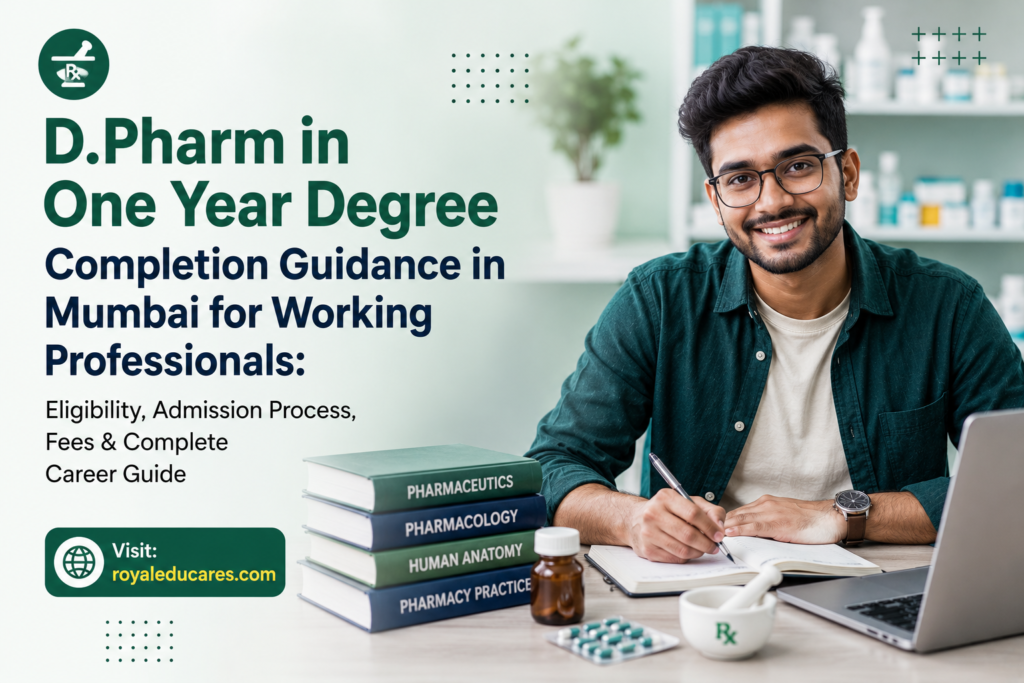
D.Pharm in One Year Degree Completion Guidance in Mumbai for Working Professionals: Eligibility, Admission Process, Fees & Complete Career Guide
Introduction
Many students cannot complete graduation due to employment, financial constraints, family responsibilities, health issues, relocation, or education gaps. Proper guidance helps eligible learners explore available academic continuation pathways confidently today.
Accreditation & Approvals
UGC-DEB APPROVED
AICTE APPROVED

AIU APPROVED
NAAC +++ ACCREDITED

COBSE BOARDS
PHARMACY COUNCIL OF INDIA
BAR COUNCIL OF INDIA

WORLD EDUCATION SERVICES

MHRD

Get Free Career Counseling
Students seeking complete One Year Degree Completion Guidance in Mumbai can explore: https://royaleducares.com/one-year-degree-completion-guidance-in-mumbai/
If you are looking specifically for D.Pharm Admission in Mumbai, visit: https://royaleducares.com/d-pharm-admission-in-mumbai/
For complete admission guidance across medical, pharmacy, and higher education courses, visit Royal Educares: https://royaleducares.com/
What is D.Pharm?
Diploma in Pharmacy (D.Pharm) is one of the most popular pharmacy courses in India for students who wish to build a career in the pharmaceutical and healthcare sector. The program equips students with knowledge of medicines, drug dispensing, pharmaceutical sciences, patient care, and pharmacy practice.
D.Pharm serves as a strong foundation for careers in retail pharmacies, hospitals, pharmaceutical manufacturing companies, healthcare organizations, and further education in pharmacy.
The curriculum combines theoretical knowledge with practical laboratory training, helping students understand medicine preparation, storage, dispensing, pharmacology, and pharmaceutical ethics.
Understanding One Year Degree Completion Guidance
Many students search online using terms such as:
- D.Pharm in One Year
- One Year Pharmacy Course
- Pharmacy Degree Completion
- One Sitting D.Pharm
- D.Pharm Gap Admission
- Pharmacy Course for Working Professionals
These search terms often arise because students who previously discontinued their education are looking for guidance on completing their academic journey.
One Year Degree Completion Guidance does not mean that every student can complete a fresh D.Pharm course in one year. Eligibility depends on an individual’s previous academic record, education gap, and the applicable rules of the concerned institution or university. Students should always seek proper academic guidance before making any decision.
Why Many Students Leave Their Studies Incomplete
Every year, thousands of students are unable to complete their education despite having the ability and interest to continue.
Some of the most common reasons include:
Financial Challenges
Many students begin working to support themselves or their families before completing their education.
Family Responsibilities
Personal responsibilities often become a priority, resulting in interrupted studies.
Full-Time Employment
Working professionals frequently struggle to balance education with demanding work schedules.
Health Issues
Medical conditions or long-term treatment can force students to take an academic break.
Relocation
Changing cities or states due to employment or family circumstances may interrupt academic continuity.
Academic Gap
Some students discontinue education for several years before deciding to continue their studies.
For such learners, receiving accurate educational guidance is extremely important.
Why Choose D.Pharm as a Career?
The healthcare and pharmaceutical industries continue to expand, creating demand for qualified pharmacy professionals.
A D.Pharm qualification can open opportunities in various sectors, including:
- Community Pharmacy
- Hospital Pharmacy
- Pharmaceutical Companies
- Medical Stores
- Drug Distribution
- Healthcare Organizations
- Diagnostic Centres
- Pharmaceutical Sales
- Healthcare Support Services
The course also provides a pathway for further education in pharmacy.
Who Can Benefit from Degree Completion Guidance?
Educational guidance can be valuable for:
- Working professionals
- Students with education gaps
- Individuals who discontinued their studies
- Learners returning after several years
- Students seeking information about continuing pharmacy education
- Candidates exploring available academic options
Proper counselling helps students understand eligibility, documentation requirements, and suitable educational pathways.
Why Mumbai is a Preferred Destination for Pharmacy Education
Mumbai has established itself as one of India’s leading educational destinations for pharmacy and healthcare studies.
Students choose Mumbai because of:
- Well-established educational institutions
- Healthcare infrastructure
- Pharmaceutical industry presence
- Practical learning opportunities
- Experienced faculty
- Better professional exposure
- Career development opportunities
Its strong healthcare ecosystem supports both academic learning and practical skill development.
Skills Developed During D.Pharm
A pharmacy professional requires a combination of scientific knowledge and practical abilities.
Important skills include:
- Medicine dispensing
- Communication skills
- Patient counselling
- Record maintenance
- Ethical pharmacy practice
- Attention to detail
- Problem-solving
- Inventory management
- Teamwork
- Professional responsibility
These competencies contribute to effective pharmaceutical practice.
Scope of Pharmacy in India
India’s pharmaceutical sector continues to play an important role in healthcare delivery.
Qualified pharmacy professionals contribute to:
- Safe medicine dispensing
- Patient education
- Drug storage and handling
- Healthcare support
- Pharmaceutical manufacturing
- Quality assurance
- Public health initiatives
As healthcare services continue to grow, trained pharmacy professionals remain an important part of the healthcare system.
Why Students Search for “D.Pharm in One Year”
Many online searches are made by students who already have an interrupted academic history.
Common situations include:
- Students who discontinued pharmacy education.
- Working professionals seeking guidance.
- Learners with long education gaps.
- Candidates looking for flexible academic options.
- Students searching for continuation pathways.
Because every student’s academic background is different, eligibility cannot be determined solely by the search term. Professional academic counselling helps students understand the options that may be available based on their individual circumstances.
Benefits of Professional Admission Guidance
Receiving accurate admission guidance helps students make informed educational decisions.
Some key benefits include:
- Understanding eligibility requirements
- Clarifying documentation
- Guidance on admission procedures
- Assistance with course selection
- Information about available educational pathways
- Better planning for future studies
Proper guidance reduces confusion and helps students proceed with greater confidence.
Why Accurate Information Matters
Students often come across misleading claims regarding fast-track or one-year qualifications.
Before taking admission, it is important to:
- Verify institutional recognition.
- Understand the applicable admission process.
- Confirm eligibility requirements.
- Review official documentation requirements.
- Seek guidance from trusted educational counsellors.
Making informed decisions helps students avoid unnecessary complications later.
Why D.Pharm Continues to Be a Popular Choice
D.Pharm remains one of the preferred pharmacy qualifications because it combines healthcare knowledge with practical training.
Students interested in medicines, patient care, and the pharmaceutical industry can develop valuable skills that support diverse career opportunities across hospitals, retail pharmacies, healthcare organizations, and pharmaceutical companies.
With proper planning, academic guidance, and continuous learning, pharmacy education can become the foundation for a rewarding professional journey.
What’s Coming Next
The next section explains D.Pharm eligibility, education gap considerations, admission process, required documents, fees, and important guidelines that every aspiring student and working professional should understand before applying.
D.Pharm Eligibility for One Year Degree Completion Guidance
Understanding the eligibility criteria is the first step before exploring any degree completion guidance. Every student’s academic background is different, especially those who have experienced an education gap or discontinued their studies.
It is important to understand that eligibility depends on the candidate’s previous academic qualifications, education history, applicable institutional guidelines, and other admission requirements.
Who Can Apply for Degree Completion Guidance?
Degree completion guidance may be suitable for individuals who:
Have an education gap.
Could not complete their pharmacy education.
Are working professionals.
Had to discontinue studies due to financial reasons.
Left education because of family responsibilities.
Took a break due to health issues.
Relocated to another city or state.
Wish to continue their academic journey after several years.
Every applicant should have their academic records evaluated to understand the available educational pathway.
Important Clarification About “D.Pharm in One Year”
Many students search online for:
D.Pharm in One Year
One Year Pharmacy Course
One Sitting D.Pharm
Pharmacy Degree Completion
D.Pharm After Long Gap
These searches generally reflect a desire to continue interrupted education.
A fresh D.Pharm course is not completed in one year simply because a student applies. Guidance is provided based on an individual’s previous qualifications, education gap, and the applicable academic regulations. Students should always verify eligibility before making any admission decision.
Educational Qualification
Eligibility depends on the student’s previous educational background and the admission requirements applicable to the institution.
Applicants may be asked to provide educational documents such as:
Class 10 Marksheet
Class 12 Marksheet
Previous Pharmacy Academic Records (where applicable)
Transfer Certificate
Leaving Certificate
Migration Certificate (if required)
Document requirements may differ depending on the institution and admission process.
Does an Education Gap Matter?
One of the most common questions students ask is whether an education gap prevents them from continuing their education.
An education gap does not automatically make a student ineligible. However, the available options depend on the individual’s academic history and the applicable admission guidelines.
Common reasons for an education gap include:
Employment
Financial difficulties
Family commitments
Health-related issues
Relocation
Personal circumstances
Professional guidance helps students understand the educational options that may be available in their specific case.
Can Working Professionals Continue Their Education?
Yes, many working professionals seek academic guidance after realizing the importance of completing their education.
Some common reasons include:
Career growth
Better employment opportunities
Professional qualification
Salary improvement
Personal achievement
Higher education goals
Before applying, working professionals should carefully understand eligibility requirements and available study options.
Documents Commonly Required
Keeping documents ready before beginning the admission process helps avoid unnecessary delays.
Commonly requested documents include:
Aadhaar Card or other valid identity proof
Passport-size photographs
Class 10 Marksheet
Class 12 Marksheet
Previous academic records (if applicable)
School Leaving Certificate
Transfer Certificate
Migration Certificate (if applicable)
Address Proof
Category Certificate (where applicable)
Additional documents may be requested depending on the admission process.
Admission Process Overview
Although procedures may vary, the admission process generally includes the following stages:
Step 1: Academic Counselling
Students discuss their educational background, academic gap, and career goals.
Step 2: Eligibility Assessment
Academic documents are reviewed to understand the available educational pathway.
Step 3: Document Verification
Required documents are verified before further processing.
Step 4: Admission Guidance
Eligible students receive guidance regarding the applicable admission procedure.
Step 5: Completion of Formalities
Candidates complete documentation and other institutional requirements.
Students should always follow the instructions provided by the concerned institution.
Understanding the Fee Structure
The overall cost may vary depending on several factors, including:
Institution
Academic pathway
Documentation requirements
Applicable university or institutional policies
Administrative charges
Students should always request the latest official fee details before proceeding with admission.
Why Professional Guidance is Helpful
Many students become confused because they receive conflicting information from unofficial sources.
Professional guidance can help students:
Understand eligibility.
Review academic records.
Clarify admission procedures.
Prepare required documentation.
Understand available educational options.
Make informed academic decisions.
Receiving accurate information at the beginning of the process can save both time and effort.
Common Mistakes Students Should Avoid
Before applying, students should avoid these common mistakes:
Believing unrealistic promises without verification.
Submitting incomplete documents.
Ignoring eligibility requirements.
Depending on unofficial information.
Waiting until the last date.
Not preserving previous academic records.
Choosing an option without proper counselling.
Careful planning and verified information contribute to a smoother admission process.
Tips Before Applying
Before starting your admission journey, consider the following recommendations:
Organize all academic documents.
Verify institutional recognition.
Understand your eligibility.
Seek guidance based on your educational history.
Compare available academic options.
Clarify all admission-related queries.
Keep copies of important documents.
Follow official admission timelines.
A well-informed approach helps students make confident educational decisions.
What’s Coming Next
The next section explains the complete D.Pharm degree completion guidance process, including counselling, document evaluation, choosing the right institution, important considerations for working professionals, common misconceptions, and practical tips for planning your academic journey.
Complete D.Pharm One Year Degree Completion Guidance Process
Students who have an education gap or could not complete their pharmacy education often look for a structured way to continue their academic journey. Understanding each stage of the guidance process helps applicants make informed decisions and avoid unnecessary confusion.
The exact procedure may vary depending on the institution and the student’s academic background, but the overall guidance process generally follows a systematic approach.
Step 1: Initial Academic Counselling
The first step is understanding the student’s educational history.
During counselling, students are generally asked about:
Previous academic qualifications
Pharmacy education history (if applicable)
Education gap
Employment status
Career objectives
Future education plans
This helps determine the most appropriate academic pathway.
Step 2: Academic Record Evaluation
Every student’s educational background is unique.
Academic records are reviewed to understand:
Previous qualifications
Completed semesters or years (where applicable)
Education gap duration
Available academic documents
Eligibility under applicable institutional guidelines
This evaluation helps identify the available continuation options.
Step 3: Understanding Available Academic Pathways
Many students search for quick solutions without understanding the applicable academic process.
Professional guidance helps explain:
Available continuation pathways
Eligibility conditions
Documentation requirements
Admission procedures
Institutional policies
Students should avoid relying on unofficial information and instead seek guidance based on their individual academic profile.
Step 4: Document Verification
Document verification is an essential part of the admission process.
Commonly verified documents may include:
Class 10 Marksheet
Class 12 Marksheet
Previous academic records
Transfer Certificate
Leaving Certificate
Migration Certificate (if applicable)
Identity Proof
Passport-size photographs
Address Proof
Keeping documents organized helps reduce delays during the admission process.
Step 5: Admission Guidance
After reviewing eligibility and documents, students receive guidance regarding the applicable admission process.
This may include information about:
Course availability
Eligibility requirements
Institutional procedures
Important timelines
Documentation formalities
Understanding each step before proceeding helps students avoid mistakes.
Step 6: Completing Admission Formalities
Eligible candidates complete the necessary admission formalities as required by the concerned institution.
Students should carefully:
Review all submitted information.
Verify document accuracy.
Preserve copies of important records.
Follow official communication.
Complete formalities within the prescribed timeline.
Choosing the Right Institution
Selecting the right institution is one of the most important decisions for any student.
Instead of choosing solely on advertisements or popularity, compare institutions based on multiple academic factors.
Important considerations include:
Recognition and approvals
Academic reputation
Faculty experience
Student support services
Infrastructure
Learning resources
Administrative transparency
Academic guidance
A thoughtful comparison helps students make better long-term decisions.
Why Working Professionals Need Proper Guidance
Working professionals often face additional challenges while planning to continue their education.
Common concerns include:
Busy work schedules
Limited study time
Family responsibilities
Long education gaps
Documentation issues
Career planning
Professional guidance helps working individuals understand suitable academic options while balancing personal and professional commitments.
Common Misconceptions About One Year Degree Completion
Many misconceptions circulate online regarding one-year degree completion.
Misconception 1: Every student can complete D.Pharm in one year.
Reality: Eligibility depends on the student’s previous academic background and the applicable institutional rules.
Misconception 2: No documents are required.
Reality: Academic and identity documents are generally required during the admission process.
Misconception 3: Education gaps automatically make students ineligible.
Reality: An education gap does not necessarily prevent a student from exploring available academic continuation options.
Misconception 4: Every institution follows the same admission process.
Reality: Admission procedures and requirements may vary depending on the institution and applicable regulations.
Benefits of Continuing Your Education
Completing your academic qualification can provide several long-term advantages.
These include:
Improved career opportunities
Professional growth
Better confidence
Higher education opportunities
Enhanced academic credentials
Greater employment prospects
Personal achievement
Returning to education after a gap demonstrates commitment to personal and professional development.
Tips for Students Returning After an Education Gap
Students resuming their studies after a break can benefit from the following suggestions:
Organize previous academic records.
Verify eligibility before applying.
Keep personal documents updated.
Plan your study schedule realistically.
Stay informed through official sources.
Seek guidance whenever required.
Maintain consistency throughout the academic journey.
Small, consistent efforts can make the transition back to education much smoother.
Mistakes to Avoid During the Admission Process
Avoid these common mistakes to ensure a hassle-free experience:
Depending on unofficial information.
Ignoring eligibility requirements.
Submitting incomplete documentation.
Delaying important formalities.
Failing to verify institutional recognition.
Misunderstanding the admission process.
Not preserving academic records.
Being well-prepared reduces the chances of unnecessary complications.
Importance of Academic Planning
Returning to education requires careful planning.
Students should consider:
Career objectives
Available study options
Time management
Financial planning
Long-term educational goals
Future career opportunities
A structured plan helps students complete their education with greater confidence and clarity.
What’s Coming Next
The next section covers the D.Pharm curriculum, course structure, subjects, practical training, laboratory sessions, pharmacy skills, and professional competencies that students develop throughout their pharmacy education.
D.Pharm Course Structure, Subjects & Practical Training
A Diploma in Pharmacy (D.Pharm) is designed to provide students with the theoretical knowledge and practical skills required for a career in the pharmaceutical and healthcare industry. The curriculum combines pharmaceutical sciences, patient care, laboratory training, and professional ethics to prepare students for various pharmacy-related roles.
Students develop an understanding of medicines, drug formulation, pharmacology, pharmaceutical chemistry, hospital pharmacy, and community pharmacy while gaining practical exposure through laboratory sessions and training.
D.Pharm Course Duration
The D.Pharm programme generally consists of:
Academic Study
Practical Laboratory Sessions
Internal Assessments
Practical Examinations
Industrial or Hospital Exposure (where applicable)
The course structure is intended to build both scientific knowledge and practical competency in pharmaceutical practice.
First Year D.Pharm Subjects
The first year focuses on developing a strong foundation in pharmaceutical sciences and healthcare principles.
Common subjects include:
Pharmaceutics
Pharmaceutical Chemistry
Pharmacognosy
Human Anatomy and Physiology
Social Pharmacy
These subjects introduce students to the basics of medicines, the human body, pharmaceutical formulations, and healthcare systems.
Pharmaceutics
Students learn about:
Dosage forms
Drug formulation
Prescription handling
Pharmaceutical calculations
Dispensing techniques
Storage of medicines
This subject forms the basis of pharmacy practice.
Pharmaceutical Chemistry
Students study:
Chemical properties of drugs
Drug composition
Pharmaceutical compounds
Quality standards
Drug stability
Understanding pharmaceutical chemistry helps ensure the safe and effective use of medicines.
Pharmacognosy
This subject focuses on medicines obtained from natural sources.
Students learn about:
Medicinal plants
Herbal drugs
Natural products
Identification techniques
Quality evaluation
Human Anatomy and Physiology
Students gain knowledge about:
Human body systems
Organ functions
Blood circulation
Nervous system
Digestive system
Respiratory system
A strong understanding of human physiology is essential for pharmacy professionals.
Social Pharmacy
Students understand:
Public health
Rational use of medicines
Health education
Disease prevention
Community healthcare
This subject highlights the pharmacist’s role in improving public health.
Second Year D.Pharm Subjects
The second year focuses on advanced pharmaceutical knowledge and professional pharmacy practice.
Major subjects generally include:
Pharmacology
Community Pharmacy and Management
Biochemistry and Clinical Pathology
Pharmacotherapeutics
Hospital and Clinical Pharmacy
Pharmacy Law and Ethics
These subjects prepare students for professional responsibilities in healthcare settings.
Pharmacology
Students study:
Drug action
Drug classification
Therapeutic uses
Adverse effects
Drug interactions
Safe medication practices
Pharmacology enables students to understand how medicines work in the human body.
Community Pharmacy and Management
Students learn about:
Patient counselling
Inventory management
Prescription evaluation
Pharmacy operations
Medicine dispensing
Healthcare communication
These skills are essential for pharmacists working in retail and community pharmacies.
Biochemistry and Clinical Pathology
This subject covers:
Blood investigations
Clinical laboratory tests
Disease diagnosis support
Biochemical processes
Laboratory interpretation
Understanding laboratory investigations helps pharmacists contribute effectively to patient care.
Pharmacotherapeutics
Students learn:
Disease management
Treatment planning
Drug therapy
Patient monitoring
Medication safety
The subject emphasizes evidence-based pharmaceutical care.
Hospital and Clinical Pharmacy
Students gain knowledge about:
Hospital pharmacy operations
Drug distribution systems
Medication safety
Clinical documentation
Patient-focused pharmaceutical services
Hospital pharmacy plays an important role in multidisciplinary healthcare.
Pharmacy Law and Ethics
Students understand:
Professional responsibilities
Pharmacy regulations
Ethical practice
Legal requirements
Patient confidentiality
Safe dispensing standards
Ethics and legal compliance are fundamental aspects of professional pharmacy practice.
Practical Laboratory Training
Practical learning is an important part of D.Pharm education.
Laboratory sessions help students develop technical competence through supervised practice.
Practical activities commonly include:
Preparation of pharmaceutical formulations
Identification of medicinal substances
Prescription interpretation
Dispensing practice
Quality control experiments
Pharmaceutical calculations
Laboratory record maintenance
These sessions strengthen confidence and improve practical understanding.
Professional Skills Developed During D.Pharm
Students develop a variety of technical and interpersonal skills throughout the programme.
Important skills include:
Medicine dispensing
Prescription reading
Patient communication
Inventory management
Documentation
Pharmaceutical calculations
Problem-solving
Professional ethics
Attention to detail
Teamwork
These competencies are valuable across different pharmacy practice settings.
Importance of Practical Learning
Practical exposure bridges the gap between classroom knowledge and real-world pharmacy practice.
Students gain experience in:
Handling medicines safely
Understanding dosage forms
Following dispensing procedures
Maintaining pharmacy records
Communicating with patients
Supporting healthcare professionals
Practical training prepares students for professional responsibilities after completing the course.
Assessment and Examination Pattern
Students are generally evaluated through multiple assessment methods, including:
Internal assessments
Written examinations
Practical examinations
Viva voce
Laboratory performance
Assignment submissions
Both theoretical knowledge and practical skills are considered important for successful completion of the programme.
Why Pharmacy Skills Matter
The role of pharmacists continues to expand with advancements in healthcare and pharmaceutical sciences.
Well-trained pharmacy professionals contribute to:
Safe medicine use
Patient education
Medication management
Healthcare quality
Public health awareness
Pharmaceutical services
Developing strong professional skills improves career opportunities and helps deliver better patient care.
Tips for Success During D.Pharm
Students can improve their academic performance by following these recommendations:
Attend lectures regularly.
Participate actively in laboratory sessions.
Revise pharmaceutical concepts consistently.
Improve communication skills.
Develop professional ethics.
Maintain accurate practical records.
Stay updated with developments in pharmacy.
Learn proper medication handling techniques.
Strengthen time management skills.
Seek guidance whenever academic support is required.
Consistent learning and practical experience contribute significantly to long-term professional success.
What’s Coming Next
The next section explains career opportunities after D.Pharm, including employment sectors, hospital pharmacy, retail pharmacy, pharmaceutical companies, government opportunities, higher education options, salary prospects, and the future scope of pharmacy for working professionals and students.
Career Opportunities After D.Pharm
A Diploma in Pharmacy (D.Pharm) provides students with diverse career opportunities in the healthcare and pharmaceutical sectors. After completing the course, graduates can explore careers in community pharmacies, hospitals, pharmaceutical companies, healthcare organizations, medical stores, and various allied healthcare services.
As the pharmaceutical industry continues to expand and healthcare awareness increases, the demand for qualified pharmacy professionals remains strong. Students who continuously upgrade their knowledge and practical skills can build a stable and rewarding career.
Career Scope After D.Pharm
D.Pharm graduates have opportunities across multiple sectors of the healthcare industry.
Popular career options include:
Community Pharmacist
Hospital Pharmacist
Retail Pharmacist
Medical Store Manager
Pharmaceutical Sales Executive
Pharmacy Assistant
Drug Distribution Executive
Medical Representative
Healthcare Support Professional
Pharmaceutical Production Assistant
The exact role depends on the employer, applicable regulations, qualifications, and professional experience.
Community Pharmacy
Community pharmacies play an important role in providing medicines and healthcare support to the public.
Responsibilities may include:
Dispensing prescribed medicines
Patient counselling
Medicine storage
Maintaining pharmacy records
Inventory management
Advising patients on the proper use of medicines
Community pharmacists are often the first healthcare professionals people consult for minor health concerns.
Hospital Pharmacy
Hospitals employ pharmacy professionals to support safe and effective medication management.
Hospital pharmacists may be involved in:
Medicine dispensing
Prescription verification
Drug inventory management
Medication safety
Coordination with doctors and nursing staff
Maintaining pharmaceutical records
Hospital pharmacy provides valuable exposure to multidisciplinary healthcare environments.
Retail Pharmacy
Retail pharmacies remain one of the largest employment sectors for D.Pharm graduates.
Professionals working in retail pharmacies commonly perform:
Dispensing medicines
Customer assistance
Stock management
Billing
Prescription verification
Patient communication
Retail pharmacy offers practical experience and opportunities for career growth.
Pharmaceutical Manufacturing Industry
India has one of the world’s largest pharmaceutical industries.
Pharmaceutical companies recruit qualified professionals in areas such as:
Manufacturing
Packaging
Production Support
Quality Assurance
Quality Control
Warehouse Operations
Documentation
Working in pharmaceutical manufacturing allows graduates to understand medicine production and quality standards.
Pharmaceutical Sales and Marketing
The pharmaceutical industry also offers careers in sales and marketing.
Responsibilities may include:
Product promotion
Healthcare professional interaction
Market development
Product education
Customer relationship management
Strong communication and interpersonal skills are valuable in these roles.
Medical Representative
Medical representatives act as a bridge between pharmaceutical companies and healthcare professionals.
Their responsibilities often include:
Product presentations
Scientific communication
Relationship building
Market feedback
Promotional activities
This career is suitable for individuals who enjoy communication and field-based work.
Drug Distribution and Supply Chain
Efficient medicine distribution is essential for the healthcare system.
Career opportunities exist in:
Pharmaceutical distributors
Wholesale medicine suppliers
Logistics
Inventory management
Supply chain coordination
Professionals help ensure timely availability of medicines across healthcare facilities.
Government Opportunities After D.Pharm
Qualified pharmacy professionals may explore opportunities in various government healthcare organizations whenever recruitment is announced.
Potential sectors include:
Government Hospitals
Public Health Departments
Primary Health Centres
Community Health Centres
Defence Healthcare Services
Municipal Healthcare Institutions
Government Medical Facilities
Eligibility, recruitment procedures, and vacancies depend on the respective authority.
Higher Education After D.Pharm
Students who wish to continue their education have several academic pathways available.
Popular options include:
Bachelor of Pharmacy (B.Pharm), subject to the applicable admission process.
Pharmacy-related certification programmes.
Healthcare management courses.
Professional skill development programmes.
Higher education can expand career opportunities and support long-term professional growth.
Entrepreneurship Opportunities
Many pharmacy professionals aspire to become entrepreneurs.
Possible opportunities include:
Pharmacy business
Medical store management
Pharmaceutical distribution
Healthcare consultancy
Wellness products
Healthcare retail services
Entrepreneurship requires proper planning, compliance with applicable regulations, and strong business management skills.
Skills That Improve Career Growth
Employers value pharmacy professionals who possess both technical knowledge and professional skills.
Important qualities include:
Communication skills
Professional ethics
Medicine knowledge
Attention to detail
Inventory management
Patient counselling
Teamwork
Time management
Adaptability
Continuous learning
Developing these skills helps professionals perform effectively in different healthcare settings.
Salary After D.Pharm
Salary after completing D.Pharm varies depending on several factors.
These include:
Experience
Job role
Employer
Location
Skills
Professional responsibilities
Additional qualifications
With experience and continuous professional development, career growth opportunities generally improve over time.
Future Scope of Pharmacy
The pharmaceutical and healthcare industries continue to evolve with technological advancements and increasing healthcare needs.
Growing areas include:
Clinical Pharmacy
Community Pharmacy
Hospital Pharmacy
Pharmaceutical Manufacturing
Digital Healthcare
Telepharmacy
Drug Safety
Patient Counselling
Healthcare Technology
As demand for quality healthcare services increases, pharmacy professionals are expected to continue playing an important role in medication management and patient care.
Benefits of Building a Career in Pharmacy
Choosing pharmacy as a profession offers several long-term advantages.
Some of these include:
Diverse employment opportunities
Contribution to healthcare
Stable career prospects
Opportunities for higher education
Professional growth
Skill development
Entrepreneurial possibilities
Continuous learning
Pharmacy remains an important profession that supports doctors, hospitals, and patients through safe and effective use of medicines.
Tips for Long-Term Career Success
Students can strengthen their professional journey by following these recommendations:
Continue learning beyond the classroom.
Improve practical pharmacy skills.
Stay updated with industry developments.
Develop effective communication.
Build professional ethics.
Gain practical experience whenever possible.
Focus on patient-centred care.
Participate in workshops and training programmes.
Strengthen leadership and teamwork abilities.
Plan future education according to career goals.
A commitment to lifelong learning helps pharmacy professionals remain competitive in the evolving healthcare industry.
What’s Coming Next
The next section covers scholarships, education loans, hostel facilities, student life, practical career tips, common admission mistakes, final guidance, and an extensive FAQ section addressing the most frequently searched questions about D.Pharm one-year degree completion guidance, eligibility, admission, career opportunities, and pharmacy education.
Pharmacy Industry in India
India has one of the world’s largest pharmaceutical industries and plays a significant role in the global healthcare sector. The country is known for pharmaceutical manufacturing, generic medicines, research, exports, and healthcare innovation.
As the healthcare industry continues to expand, the demand for trained pharmacy professionals is expected to remain strong across various sectors.
Graduates with pharmacy qualifications can contribute to medicine safety, patient care, pharmaceutical operations, and healthcare support services.
Retail Pharmacy Career
Retail pharmacy is one of the most common career choices for pharmacy professionals.
Retail pharmacists play an important role in ensuring patients receive medicines safely and understand their proper usage.
Typical responsibilities include:
Dispensing prescribed medicines
Maintaining medicine inventory
Patient counselling
Explaining dosage instructions
Checking medicine availability
Managing pharmacy records
Following applicable pharmacy regulations
Retail pharmacy offers valuable experience in patient interaction and medicine management.
Hospital Pharmacy Career
Hospital pharmacists work closely with doctors, nurses, and other healthcare professionals to support patient treatment.
Their responsibilities may include:
Reviewing prescriptions
Dispensing medicines
Maintaining medicine stock
Monitoring medication safety
Preparing pharmaceutical records
Supporting inpatient and outpatient services
Hospital pharmacy provides exposure to multidisciplinary healthcare environments and professional clinical practice.
Pharmaceutical Manufacturing
Pharmaceutical manufacturing is an important employment sector for pharmacy professionals.
Common departments include:
Production
Manufacturing
Packaging
Quality Assurance
Quality Control
Documentation
Warehouse Management
Professionals help ensure medicines are manufactured according to prescribed quality standards and regulatory requirements.
Quality Assurance and Quality Control
Maintaining medicine quality is one of the most important responsibilities in the pharmaceutical industry.
Quality Assurance
Quality assurance focuses on maintaining consistent manufacturing standards and compliance throughout the production process.
Responsibilities often include:
Process monitoring
Documentation review
Standard operating procedures
Regulatory compliance
Internal quality systems
Quality Control
Quality control involves testing and evaluating pharmaceutical products before they reach the market.
Professionals may perform:
Laboratory testing
Sample analysis
Stability evaluation
Product verification
Quality documentation
Both departments contribute to medicine safety and product reliability.
Clinical Research Opportunities
Clinical research supports the development and evaluation of medicines and healthcare treatments.
Pharmacy professionals may contribute in areas such as:
Clinical documentation
Research coordination
Data management
Regulatory compliance
Patient safety monitoring
Clinical research combines scientific knowledge with healthcare practice and documentation.
Drug Safety and Pharmacovigilance
Pharmacovigilance focuses on monitoring the safety of medicines after they become available for patient use.
Professionals may assist in:
Recording adverse drug reactions
Safety reporting
Documentation
Drug safety monitoring
Regulatory compliance
This field contributes to improving medication safety and public health.
Medical Coding and Healthcare Documentation
Some pharmacy graduates also explore careers in healthcare documentation and medical coding after obtaining the required training.
These roles may involve:
Medical record management
Clinical documentation
Healthcare data processing
Insurance documentation
Coding support
Attention to detail and accuracy are important in these roles.
Opportunities in Pharmaceutical Distribution
Efficient medicine distribution is essential to ensure timely availability of pharmaceutical products.
Career opportunities include:
Distribution management
Inventory control
Supply chain coordination
Warehouse supervision
Logistics support
These professionals help maintain an uninterrupted supply of medicines to healthcare facilities.
Future Trends in Pharmacy
Modern pharmacy continues to evolve with advancements in science and technology.
Emerging areas include:
Digital Pharmacy
Telepharmacy
Artificial Intelligence in Healthcare
Electronic Prescriptions
Automated Dispensing Systems
Digital Health Records
Personalized Medicine
Smart Pharmacy Management
Keeping up with these developments helps professionals remain competitive in the healthcare industry.
Importance of Continuous Learning
Healthcare and pharmaceutical sciences continue to evolve rapidly.
Pharmacy professionals should regularly upgrade their knowledge through:
Continuing education programmes
Professional workshops
Industry seminars
Skill development courses
Scientific conferences
Healthcare publications
Continuous learning improves professional competence and career advancement opportunities.
Professional Ethics in Pharmacy
Ethical practice is a fundamental responsibility of every pharmacy professional.
Important ethical principles include:
Patient confidentiality
Honest communication
Responsible medicine dispensing
Professional integrity
Respect for patients
Compliance with applicable regulations
Maintaining ethical standards strengthens patient trust and professional credibility.
Soft Skills Required for Pharmacy Professionals
Technical knowledge alone is not enough for long-term success.
Important professional skills include:
Communication
Leadership
Teamwork
Critical thinking
Time management
Problem-solving
Adaptability
Customer service
Professional behaviour
Decision-making
Developing these skills helps professionals perform effectively in diverse healthcare environments.
Challenges in the Pharmacy Profession
Like every healthcare profession, pharmacy also presents certain challenges.
Professionals should be prepared for:
Continuous learning
Keeping up with regulatory changes
Managing medicine inventory
Patient counselling responsibilities
Maintaining documentation accuracy
Following professional ethics
Working in fast-paced healthcare environments
Overcoming these challenges helps build confidence and professional expertise.
Why Pharmacy Remains a Promising Career
The pharmacy profession continues to play a vital role in modern healthcare.
Growing demand for medicines, expanding healthcare services, increasing public awareness, and advancements in pharmaceutical technology continue to create opportunities for qualified pharmacy professionals.
Individuals who remain committed to learning, ethical practice, and patient care can build a stable and rewarding career in this field.
Preparing for Long-Term Professional Growth
Students and working professionals should focus on continuous improvement throughout their careers.
Recommended strategies include:
Strengthen pharmaceutical knowledge.
Improve practical skills.
Develop effective communication.
Stay informed about industry developments.
Build professional networks.
Participate in healthcare training programmes.
Enhance digital skills relevant to pharmacy.
Maintain professional ethics.
Plan higher education based on career goals.
Continue upgrading knowledge throughout your professional journey.
Consistent effort, professional discipline, and lifelong learning contribute significantly to success in the pharmacy profession.
What’s Coming Next
The final section includes scholarships, education loans, student support, practical admission tips, common mistakes to avoid, a comprehensive conclusion, and 50+ frequently asked questions (FAQs) covering D.Pharm one-year degree completion guidance, eligibility, admission, career opportunities, and pharmacy-related queries.
Scholarships for D.Pharm Students
Pursuing pharmacy education is an important investment in your future. To support deserving students, various scholarship schemes are offered by government departments, educational institutions, charitable organizations, and private foundations.
The availability, eligibility criteria, and application process may differ depending on the scholarship provider.
Some common scholarship categories include:
Merit-Based Scholarships
Need-Based Scholarships
Government Scholarship Schemes
Minority Scholarships
Reserved Category Scholarships
Institutional Scholarships
Financial Assistance Programmes
Students should regularly check the latest scholarship notifications and eligibility requirements before applying.
Education Loan for D.Pharm
Education loans help students finance their pharmacy education without placing an immediate financial burden on their families.
Many banks and financial institutions offer education loans for eligible students pursuing professional courses.
While applying for an education loan, students should compare:
Loan eligibility
Interest rates
Repayment terms
Moratorium period
Processing charges
Documentation requirements
Applicants should always review the latest loan policies of the respective financial institution before making a decision.
Hostel Facilities
Students relocating to Mumbai often prefer institutions that provide safe and comfortable hostel accommodation.
While comparing hostel facilities, consider:
Campus security
Clean and hygienic rooms
Library access
Internet connectivity
Study environment
Mess facilities
Medical support
Transportation
Recreation facilities
A supportive residential environment allows students to focus more effectively on their education.
Student Life During D.Pharm
Student life is not limited to classroom learning.
Throughout the programme, students participate in:
Laboratory practicals
Academic seminars
Healthcare awareness programmes
Workshops
Group discussions
Community health activities
Skill development sessions
Professional events
These activities help improve both academic knowledge and personal development.
Why Proper Academic Guidance Matters
Students returning after an education gap often have many questions regarding eligibility, documentation, admission procedures, and future career opportunities.
Proper guidance helps students:
Understand their academic profile.
Clarify eligibility requirements.
Organize important documents.
Understand the admission process.
Plan future education.
Make informed academic decisions.
Seeking accurate information from reliable sources helps avoid unnecessary confusion.
Tips for Working Professionals
Working professionals often balance employment with educational goals.
The following suggestions may help:
Plan a realistic study schedule.
Keep academic documents organized.
Maintain consistency in learning.
Stay updated with admission announcements.
Set clear career goals.
Seek professional guidance whenever necessary.
Balance work and study effectively.
Continue upgrading professional knowledge.
A structured approach helps professionals manage both career and education successfully.
Common Admission Mistakes to Avoid
Many students face avoidable challenges because of simple mistakes during the admission process.
Some common mistakes include:
Believing unverified information.
Ignoring eligibility requirements.
Waiting until the last date.
Submitting incomplete documentation.
Not preserving previous academic records.
Choosing an institution without proper research.
Ignoring official admission updates.
Failing to clarify doubts before applying.
Proper planning significantly improves the admission experience.
How to Choose the Right Institution
Selecting the right institution is an important step in building a successful pharmacy career.
Before making a decision, students should evaluate:
Institutional recognition
Academic reputation
Faculty experience
Practical training opportunities
Student support services
Infrastructure
Laboratory facilities
Learning resources
Overall academic environment
Choosing a suitable institution contributes to both academic success and professional development.
Professional Development Tips
Pharmacy professionals should continue developing both technical and interpersonal skills throughout their careers.
Important areas of improvement include:
Professional communication
Leadership
Ethical practice
Time management
Critical thinking
Patient counselling
Digital literacy
Team collaboration
Continuous learning
Adaptability
Developing these qualities helps students remain competitive in the healthcare industry.
Why Pharmacy Continues to Grow
The pharmacy profession remains an important pillar of modern healthcare.
Increasing awareness about safe medication practices, expanding healthcare services, technological advancements, and growing pharmaceutical research continue to create opportunities for qualified pharmacy professionals.
Students who remain committed to learning and professional ethics can build long-term careers across different sectors of healthcare.
Conclusion
A Diploma in Pharmacy is an excellent choice for students interested in healthcare, medicines, and patient care. For individuals who experienced an education gap, professional responsibilities, financial challenges, or personal circumstances, receiving proper academic guidance can help them understand the available continuation pathways based on their eligibility.
Mumbai continues to be a preferred destination for pharmacy education because of its educational infrastructure, healthcare ecosystem, and professional opportunities. By understanding the admission process, preparing the required documents, selecting the right institution, and making informed decisions, students can confidently plan their academic and professional future.
Whether your goal is employment, higher education, entrepreneurship, or long-term career growth in the pharmaceutical industry, proper planning and continuous learning remain the foundation of success.
Frequently Asked Questions (FAQs)
1. What is D.Pharm?
D.Pharm (Diploma in Pharmacy) is a diploma programme that prepares students for careers in the pharmaceutical and healthcare sectors.
2. Can working professionals seek D.Pharm degree completion guidance?
Yes. Guidance may help working professionals understand the academic options available based on their educational background and eligibility.
3. Can an education gap affect admission?
An education gap does not automatically prevent further education. Eligibility depends on the student’s academic history and applicable institutional requirements.
4. Is D.Pharm a good career option?
Yes. Pharmacy offers opportunities in hospitals, community pharmacies, pharmaceutical companies, healthcare organizations, and higher education.
5. What documents are commonly required?
Requirements vary, but commonly requested documents include academic records, identity proof, photographs, and other applicable certificates.
6. Can I pursue higher education after D.Pharm?
Eligible students may pursue higher studies according to the applicable admission criteria.
7. Are scholarships available for D.Pharm students?
Various government, institutional, and private scholarship schemes may be available depending on eligibility.
8. Can I apply for an education loan?
Many financial institutions provide education loans subject to their policies and eligibility requirements.
9. Why is professional admission guidance important?
It helps students understand eligibility, documentation, admission procedures, and suitable academic pathways.
10. Where can I get guidance for D.Pharm admission and degree completion in Mumbai?
Students looking for guidance can explore Royal Educares for information on pharmacy admissions, degree completion guidance, and other higher education opportunities.
Frequently Asked Questions (FAQs)
11. What is D.Pharm One Year Degree Completion Guidance?
It refers to academic guidance for eligible students with previous educational records or education gaps. It does not mean every student can complete a fresh D.Pharm course in one year.
12. Can I complete a fresh D.Pharm in one year?
No. A fresh D.Pharm course is not completed in one year simply by taking admission. Eligibility depends on the student’s academic background and applicable institutional guidelines.
13. Who should apply for degree completion guidance?
Students with education gaps, discontinued studies, working professionals, and learners seeking to continue their education may benefit from professional guidance.
14. Is D.Pharm suitable for working professionals?
Working professionals who meet the applicable eligibility requirements can explore suitable educational pathways through proper academic guidance.
15. Does an education gap affect eligibility?
An education gap alone does not automatically determine eligibility. Each case should be evaluated individually.
16. Why do students search for D.Pharm in One Year?
Most students searching this term have interrupted education and are looking for guidance regarding available continuation options.
17. Is D.Pharm recognized?
Students should always choose institutions and programmes that comply with the applicable regulatory and institutional requirements.
18. What documents are generally required?
Academic certificates, identity proof, photographs, transfer or leaving certificates, and other applicable documents may be required.
19. Can I continue my education after a long gap?
Many students resume their education after several years. Available options depend on individual eligibility and institutional policies.
20. Is counselling important before admission?
Yes. Academic counselling helps students understand eligibility, documentation, and available educational pathways.
21. What skills are developed during D.Pharm?
Students develop medicine dispensing, communication, pharmaceutical knowledge, patient counselling, documentation, ethics, and inventory management skills.
22. What subjects are included in D.Pharm?
The curriculum generally includes Pharmaceutics, Pharmacology, Pharmaceutical Chemistry, Pharmacognosy, Human Anatomy and Physiology, Community Pharmacy, Hospital Pharmacy, and Pharmacy Law.
23. Does D.Pharm include practical training?
Yes. Practical laboratory sessions and professional training are important parts of the programme.
24. Can I work in a hospital after D.Pharm?
Eligible graduates may explore opportunities in hospital pharmacy and other healthcare settings.
25. Can I work in a retail pharmacy?
Yes. Retail pharmacies are among the common employment options for qualified pharmacy professionals.
26. Can I pursue higher studies after D.Pharm?
Eligible students may continue higher education according to the applicable admission process.
27. Is pharmacy a good career?
Pharmacy offers diverse opportunities in healthcare, pharmaceutical companies, hospitals, retail pharmacies, and public health.
28. What is hospital pharmacy?
Hospital pharmacy focuses on medicine management, dispensing, inventory control, and supporting patient care in hospitals.
29. What is community pharmacy?
Community pharmacy involves dispensing medicines and providing healthcare guidance to the public.
30. What is pharmaceutical manufacturing?
It involves the production, quality control, packaging, and distribution of medicines.
31. Can D.Pharm graduates work in pharmaceutical companies?
Yes. Opportunities may be available in manufacturing, quality assurance, documentation, sales, and related departments.
32. Is communication important for pharmacists?
Yes. Effective communication supports patient counselling and professional healthcare services.
33. Can pharmacy professionals become entrepreneurs?
Eligible professionals may establish pharmacy-related businesses after fulfilling the applicable legal and regulatory requirements.
34. What is pharmacology?
Pharmacology is the study of medicines, their effects, therapeutic uses, and safe administration.
35. What is pharmacognosy?
Pharmacognosy deals with medicines derived from natural sources such as plants.
36. What is pharmacy law?
It covers the legal and ethical responsibilities related to pharmacy practice.
37. Is ethics important in pharmacy?
Yes. Ethical practice is essential for patient safety and professional responsibility.
38. What are the career options after D.Pharm?
Career opportunities include retail pharmacy, hospital pharmacy, pharmaceutical companies, healthcare organizations, sales, distribution, and higher education.
39. Can I get an education loan?
Many financial institutions offer education loans based on their eligibility criteria and policies.
40. Are scholarships available?
Various government, institutional, and private scholarship schemes may be available for eligible students.
41. Is hostel accommodation available?
Many institutions offer hostel facilities, although availability differs from one institution to another.
42. How important is practical learning?
Practical training develops confidence, technical competence, and professional skills.
43. Can working professionals continue their studies?
Many working professionals return to education after receiving proper academic guidance.
44. Why should I organize my documents before applying?
Proper documentation helps avoid delays during admission and verification.
45. How can I choose the right institution?
Compare recognition, faculty, infrastructure, practical training, student support, and academic reputation before making a decision.
46. What mistakes should students avoid?
Avoid relying on unofficial information, submitting incomplete documents, and ignoring eligibility requirements.
47. Why is academic guidance important?
It helps students understand eligibility, documentation, admission procedures, and suitable educational options.
48. Is continuous learning important in pharmacy?
Yes. Healthcare and pharmaceutical sciences continue to evolve, making lifelong learning essential.
49. Can pharmacy professionals work in healthcare support services?
Yes. Opportunities exist in healthcare organizations, pharmaceutical companies, and related sectors.
50. What qualities make a successful pharmacy professional?
Professional ethics, communication, technical knowledge, attention to detail, teamwork, and continuous learning.
51. Why is Mumbai a preferred destination for pharmacy education?
Mumbai offers established educational institutions, healthcare infrastructure, pharmaceutical industry exposure, and diverse learning opportunities.
52. Where can I get One Year Degree Completion Guidance in Mumbai?
Students seeking academic guidance can explore the available information through Royal Educares to understand suitable educational pathways based on their eligibility.
53. Where can I get guidance for D.Pharm admission in Mumbai?
Students can seek professional counselling to understand eligibility, admission procedures, documentation requirements, and available pharmacy education options.
54. Is proper verification important before taking admission?
Yes. Students should always verify institutional recognition, eligibility requirements, documentation, and admission procedures before making any academic decision.
55. What is the best way to plan a successful pharmacy career?
Choose the right institution, build strong pharmaceutical knowledge, develop practical skills, continue learning, follow professional ethics, and stay updated with advancements in healthcare and pharmacy.
Final Thoughts
Completing your pharmacy education can open the door to valuable opportunities in healthcare, pharmaceutical services, and professional growth. Students who have experienced an education gap or career interruption should seek accurate academic guidance, understand their eligibility, and make informed decisions based on official requirements. With proper planning, continuous learning, and the right educational support, you can confidently move toward achieving your academic and career goals in the pharmacy profession.
Contact Royal Educares
Royal Educares
Education Guidance & Admission Support Across India
 Website:
https://royaleducares.com/
 Email:
info@royaleducares.com
 Phone:
+91 9819649369
 Address:
9/D-1, Office No. 005, Sangharsh Nagar, Chandivali, Powai, Mumbai, Maharashtra 400072, India
 GET DIRECTION
Google Map
Start your Admission Today!
Let Us Help You Choose the Right Course for Your Future.